This bean dish is prepared “à Mineira,” or in the style of cooking from Minas Gerais, a southeastern state of Brazil. It is usually served with collard greens and pork chops. We will be using canned beans on this recipe. Canned beans are beans someone else cooked and then canned, and canning is an inoffensive preserving process that’s certainly no good for things you want undercooked or crisp-tender, but is fine for things you don’t mind mushy. I’m not saying I’m giving up on dried beans, but I’m going to think a little more often about canned beans from now on. In modern culture, beans are often synonymous with "nothing." But this often-overlooked pantry staple is a powerful source of nutrition. Beans bring plenty of good stuff to the table, including fiber, iron and other minerals and vitamins. Beans also pack enough protein to be an economical stand-in for meat. Beans aren't just good for us; they're good for the earth, too. Wherever beans grow, they build up nitrogen in the soil, making this nutrient available for the next crop that grows there. Fortunately, since we can't wait that long for a meal, bean farmers make it easy for us by canning this valuable produce. All that goodness, precooked and ready to use, can be ours with a simple spin of the can opener, and beans can have a starring role in everything from appetizers to desserts. Try this delicious use for canned beans.
Preparation time: 10 minutes Cooking time: 20 to 25 minutes Serves 4 to 6 INGREDIENTS: 3 c. canned beans 2 tbsp. olive oil 1 medium onion, chopped finely 2 cloves garlic, peeled and minced 3/4 c. manioc flour salt and pepper to taste PROCEDURE: 1) Drain beans over a bowl and reserve the liquid. 2) Place beans in a food processor or blender about 1/2 c. at a time, along with a little of their liquid. Process beans until smooth. Repeat with remaining beans. 3) In a wide, deep saucepan, heat oil over medium heat. Add onion and cook 5 minutes, or until onion is translucent (clear). Add garlic and cook 1 to 2 minutes longer. 4) Reduce heat to low and carefully add mashed beans to pan. Slowly add manioc flour, stirring constantly. Continue cooking over low heat for 10 to 15 minutes longer, adding a bit more bean liquid if the mixture is too thick. Add salt and pepper to taste and serve hot. Quick Cooking Tips: Many kinds of beans work well for this recipe, including black beans, kidney beans, navy beans, pinto beans, and great northern beans. For variety, some cooks like to sauté a chopped green pepper and chopped tomato with the onion. If you add these ingredients, sauté the mixture for an extra minute or two before adding the garlic in Step 3. Try this other delicious and healthy Brazilian Recipe... Pastéis- Turnovers Recipe or Acarajé- Black-Eyed Pea Fritters Recipe Watch Video: How to Cook Tutu à Mineira or Mashed Beans
CALORIE COUNTER: Canned Beans Beans Canned, With Pork And Tomato Sauce A Grade 238 Calories Nutrition Facts Serving Size 1 cup (253 g)
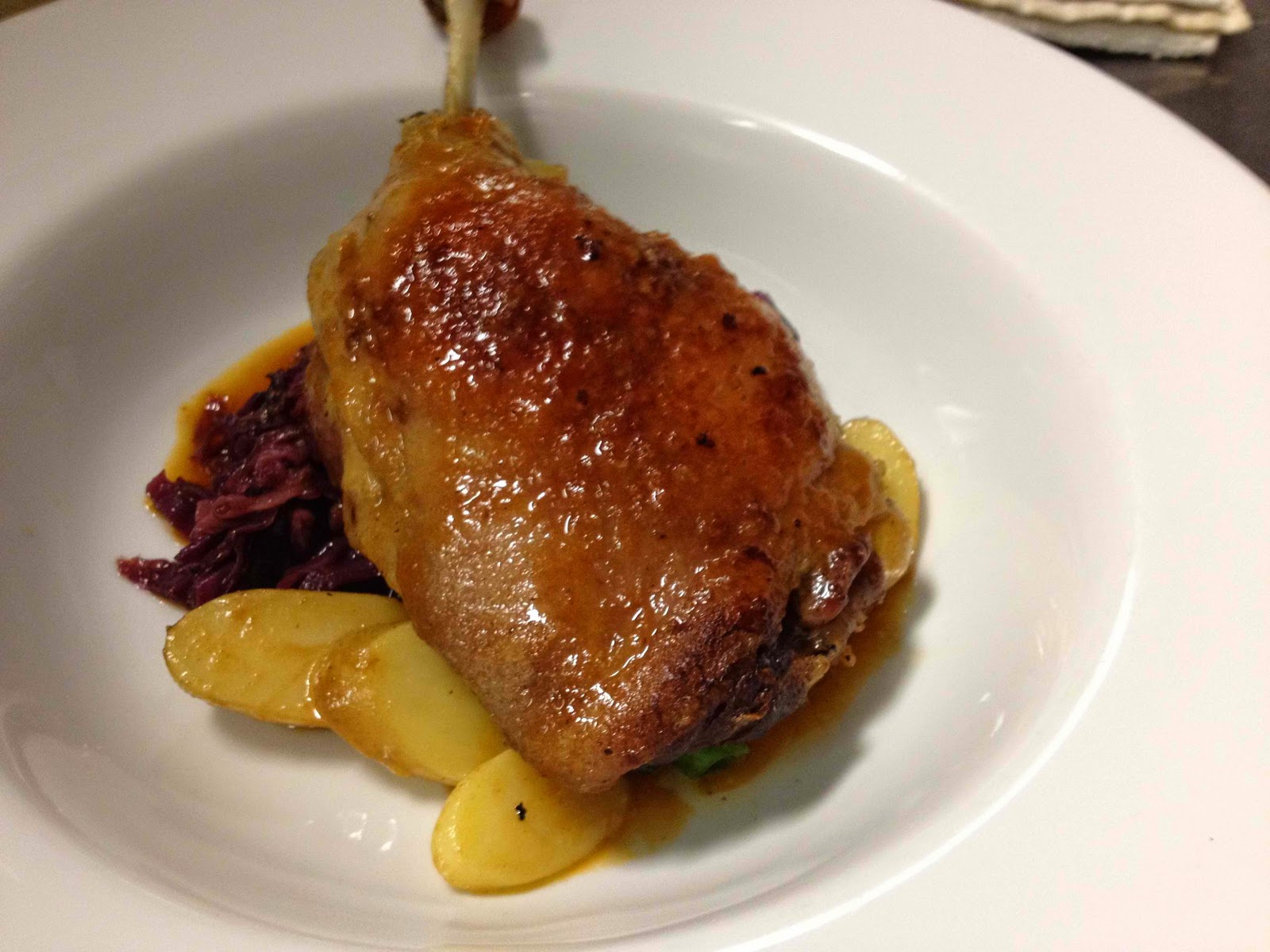
Duck confit or confit de canard is a French dish made with the leg of the duck. While it is made across France, it is seen as a specialty of Gascony, duck confit is a time-honored method of preserving meat by salting it and cooking it slowly in its own fat. The cooked meat is then packed into a crock or pot and covered with its cooking fat, which acts as a seal and preservative.
The French word confit means "preserved," and the process was devised as a means of preserving a variety of meats and poultry — most traditionally goose, duck, or pork. It involves fully curing the meat in salt, then poaching it slowly in fat, and storing it covered with the fat until you are ready to eat it or cook with it. The technique evolved over thousands of years in different cultures around the world, but, clearly, it is a dying art. Curing the meat in salt makes the water in it unavailable to microorganisms, which renders them incapable of causing spoilage. Covering the meat with at least an inch of fat after it has been cooked keeps air from reaching it, further retarding the tendency to spoil. If the meat has been properly cured, a confit will keep in a cool, dark place (a cellar or refrigerator) for six months. You can also renew a confit after the first six months by recooking it, in which case, it will last for another four to six months. (For best, flavor, however, the confit should be consumed within three to five months of the initial cooking). Good quality confit is also sold in cans, which can be kept for several years. The flavorful fat from the confit may also be used in many other ways, as a frying medium for sautéed vegetables (e.g., green beans and garlic, wild or cultivated mushrooms), savory toasts, scrambled eggs or omelettes, and as an addition to short crust pastry for tarts and quiches. A classic duck confit recipe is to fry or grill the legs in a bit of the fat until they are well-browned and crisp, and use more of the fat to roast some potatoes and garlic as an accompaniment. The potatoes roasted in duck fat to accompany the crisped-up confit is called pommes de terre à la sarladaise. Another accompaniment is red cabbage slow-braised with apples and red wine. The legs and thighs are the fattiest portions of the bird and therefore the ones you want to use. Allowing the legs to sit overnight or longer with herbs imparts more flavor into the meat and fat. Since the meat will be hanging out in the fat for a nice long time as it slowly cooks, it's worth it to seek out high-quality fresh herbs. Duck confit is also a traditional ingredient in many versions of cassoulet.
How to Make Duck Confit
Servings: 4 to 6 INGREDIENTS: Six duck legs 36 garlic cloves 8 cups of rendered duck fat kosher salt 1/2 tsp ground cumin 1/2 tsp ground coriander 1/2 tsp ground cinnamon 1/2 tsp ground allspice 1/2 tsp ground ginger 1/4 tsp freshly ground nutmeg 1/8 tsp ground cloves 1/4 tsp finely crumbled dried thyme 1 Turkish bay leaf, finely crumbled PROCEDURE: 1) Mix all the spices together and sprinkle them evenly over the legs. 2) Measure out enough kosher salt to have 1/3 ounce for each pound of meat, and sprinkle it evenly over all sides of the legs. 3) Set them in a flat, glass baking dish with the garlic cloves, cover with plastic wrap, and cure them in the refrigerator for 36 hours. 4) Preheat the oven to 275°F (135°C;). 5) Drain all the liquid from the baking dish. 6) Pat the legs, garlic cloves, and dish dry. 7) Return the legs and garlic to the dish and cover with the duck fat. Bake until the garlic cloves have turned a deep golden color, which will take 2 to 2-1/2 hours. 8) Let the meat cool in the fat until it can safely be transferred to a large canning jar. 9) Strain the fat through a cheesecloth, and pour enough over the meat to cover it by at least an inch. 10) Cool it completely, seal the jar, and store it in a cool, dark place such as a cellar or refrigerator for up to six months. Once your confit is finished, it'll keep for up to six months refrigerated and the leftover duck fat can be re-used for frying potatoes, eggs, plantains and making popcorn. Learn... how to make clarified butter.
The
information contained herein is provided as a public service with the
understanding that this site makes no warranties, either expressed or implied,
concerning the accuracy, completeness, reliability, or suitability of the
information. Nor does warrant that the use of this information is free of any
claims of copyright infringement. This site do not endorse any commercial
providers or their products.
Culinary Physics
Blog:You have the potential to be HEALTHY, wealthy and to be BEAUTIFUL! Unlock the knowledge to a life of radiant health and unstoppable vitality.
This is a blog where life-changing nutrition and health facts merges with inspiring storytelling and stunning visuals. I’m on a mission to EMPOWER YOU with the tools and mindset to transform your relationship with your body, energy levels, and overall wellbeing.
Each post is a masterclass in optimizing human nutrition and performance. PRACTICAL TIPS that you can apply to your own journey towards making your health a non-negotiable priority.
You'll discover the latest cutting-edge research from trusted experts in a way that entertains as it educates. We'll cut through conflicting health trends to give you clear, SCIENCE-BACKED guidance. From busting health myths and biohacks for peak physical and mental fitness, you will get the blueprint to LEVEL UP your health span.
2011- 2027 All Rights Reserved. Culinary Physics Blog